In a custom framework, the
table element as well as the table columns can have specified widths. For
these widths to be considered by Author mode, you need to provide the
means for determining them. As explained in Configuring Tables, if you use the table
element attribute widthOxygen XML Editor plugin can determine the table width automatically. In this example the
table has col elements with width attributes that are not recognized
by default. You will need to implement a Java extension class to determine the column
widths.
Method init is taking as argument an ro.sync.ecss.extensions.api.node.AuthorElement that represents the XML
table element. In our case the column widths are specified in
col elements from the table element. In such cases you
must collect the span information by analyzing the table element.
publicvoid init(AuthorElement tableElement) {
this.tableElement = tableElement;
AuthorElement[] colChildren = tableElement.getElementsByLocalName("customcol");
if (colChildren != null && colChildren.length > 0) {
for (int i = 0; i < colChildren.length; i++) {
AuthorElement colChild = colChildren[i];
if (i == 0) {
colsStartOffset = colChild.getStartOffset();
}
if (i == colChildren.length - 1) {
colsEndOffset = colChild.getEndOffset();
}
// Determine the 'width' for this col.
AttrValue colWidthAttribute = colChild.getAttribute("width");
String colWidth = null;
if (colWidthAttribute != null) {
colWidth = colWidthAttribute.getValue();
// Add WidthRepresentation objects for the columns this 'customcol'// specification spans over.
colWidthSpecs.add(new WidthRepresentation(colWidth, true));
}
}
}
}
The method isTableAcceptingWidth should check if the table cells are
td.
The method isTableAndColumnsResizable should check if the table cells are
td. This method determines if the table and its columns can be resized
by dragging the edge of a column.
Methods getTableWidth and getCellWidth are used to determine the table
and column width. The table layout engine will ask this ro.sync.ecss.extensions.api.AuthorTableColumnWidthProvider
implementation what is the table width for each table element and the cell width for each
cell element from the table that was marked as cell in the CSS using the property
display:table-cell. The implementation is simple and just parses the
value of the width attribute. The methods must return null for the
tables / cells that do not have a specified width.
	public WidthRepresentation getTableWidth(String tableCellsTagName) {
		WidthRepresentation toReturn = null;
		if (tableElement != null && "td".equals(tableCellsTagName)) {
			AttrValue widthAttr = tableElement.getAttribute("width");
			if (widthAttr != null) {
				String width = widthAttr.getValue();
				if (width != null) {
					toReturn = new WidthRepresentation(width, true);
				}
			}
		}
		return toReturn;
	}
        public List<WidthRepresentation>
getCellWidth(AuthorElement cellElement, int colNumberStart,
			int colSpan) {
		List<WidthRepresentation> toReturn = null;
		int size = colWidthSpecs.size();
		if (size >= colNumberStart && size >= colNumberStart + colSpan) {
			toReturn = new ArrayList<WidthRepresentation>(colSpan);
			for (int i = colNumberStart; i < colNumberStart + colSpan; i ++) {
				// Add the column widths
				toReturn.add(colWidthSpecs.get(i));
			}
		}
		return toReturn;
	}
Methods commitTableWidthModification and commitColumnWidthModifications
are used to commit changes made to the width of the table or its columns when using the
mouse drag gestures.
publicvoid commitTableWidthModification
(AuthorDocumentController authorDocumentController,
int newTableWidth, String tableCellsTagName) throws AuthorOperationException {
if ("td".equals(tableCellsTagName)) {
if (newTableWidth > 0) {
if (tableElement != null) {
String newWidth = String.valueOf(newTableWidth);
authorDocumentController.setAttribute(
"width",
new AttrValue(newWidth),
tableElement);
} else {
thrownew AuthorOperationException("Cannot find the table element.");
}
}
}
}
publicvoid commitColumnWidthModifications
(AuthorDocumentController authorDocumentController,
WidthRepresentation[] colWidths, String tableCellsTagName)
throws AuthorOperationException {
if ("td".equals(tableCellsTagName)) {
if (colWidths != null && tableElement != null) {
if (colsStartOffset >= 0 && colsEndOffset >= 0
&& colsStartOffset < colsEndOffset) {
authorDocumentController.delete(colsStartOffset,
colsEndOffset);
}
String xmlFragment = createXMLFragment(colWidths);
int offset = -1;
AuthorElement[] header = tableElement.getElementsByLocalName("header");
if (header != null && header.length > 0) {
// Insert the cols elements before the 'header' element
offset = header[0].getStartOffset();
}
if (offset == -1) {
thrownew AuthorOperationException("No valid offset to insert column width");
}
authorDocumentController.insertXMLFragment(xmlFragment, offset);
}
}
}
private String createXMLFragment(WidthRepresentation[] widthRepresentations) {
StringBuffer fragment = new StringBuffer();
String ns = tableElement.getNamespace();
for (int i = 0; i < widthRepresentations.length; i++) {
WidthRepresentation width = widthRepresentations[i];
fragment.append("<customcol");
String strRepresentation = width.getWidthRepresentation();
if (strRepresentation != null) {
fragment.append(" width=\"" + width.getWidthRepresentation() + "\"");
}
if (ns != null && ns.length() > 0) {
fragment.append(" xmlns=\"" + ns + "\"");
}
fragment.append("/>");
}
return fragment.toString();
}
The following three methods are used to determine what type of column width
specifications the table column width provider support. In our case all types of
specifications are allowed:
Note: The complete source code for framework customization
examples can be found in the oxygen-sample-framework module of the Oxygen
SDK, available as a Maven archetype on the Oxygen XML Editor plugin website.
In the listing below, the XML document contains the table element:
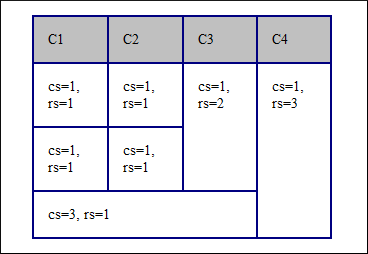
When no table column width provider is specified, the table has the following layout:
Figure: Table layout when no column width provider is specified
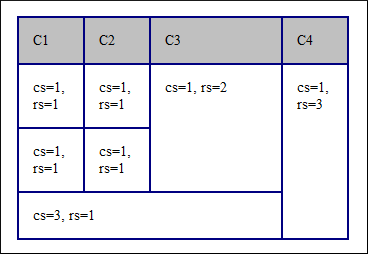
When the above implementation is configured, the table has the correct layout:
Figure: Columns with custom widths
Note: The complete source code for framework customization
examples can be found in the oxygen-sample-framework module of the Oxygen
SDK, available as a Maven archetype on the Oxygen XML Editor plugin website.